


Karaoke is a conservative business. The top favorite songs don’t change for years, and successful venue formats rarely undergo revolutions. If you plan to invest in this industry, let’s break down the four main business models: how they make money, their weak points, and the hidden risks waiting for you.
1. Classic Large Karaoke Club
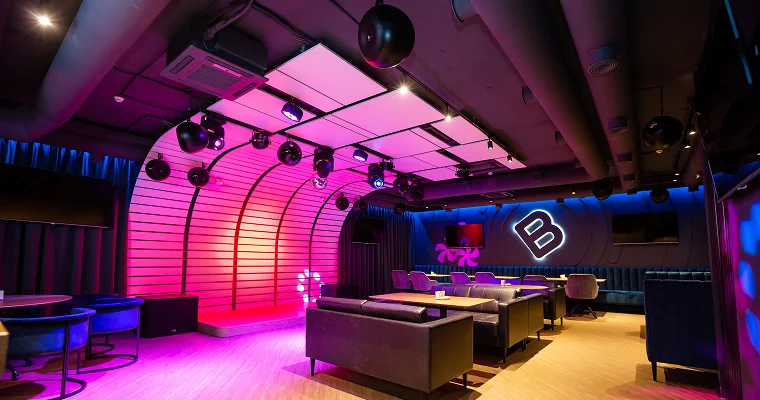
The most popular format everywhere except in Asian countries. This is a common hall with a stage where everyone sings in turn and follows strict rules.
- Ideal area: 100–200 m² (roughly 10–15 tables for groups of 2 to 8 people).
- The main person in the room: The sound engineer. They are god and king. They manage the queue, save those who hit the wrong notes, and maintain a fair atmosphere.
- Show and drive: You will need professional backup singers, an active bar, and a dance floor (boldly allocate up to 40% of the space for this). People come not only to sing but to party during musical breaks.
- How we make money: Entrance tickets, table deposits, bar/kitchen, and generous tips for out-of-turn songs (Crazy menu).
- Hidden risk: Avoid gigantomania. Clubs measuring 300–500 m² are a mistake. The larger the seating capacity, the longer a guest waits for their song. Waiting breeds boredom, boredom escalates into irritation, and from there, conflicts are just around the corner. The venue’s reputation will collapse very quickly.
2. Karaoke Rooms (Asian Style)
Read also: What Is a Karaoke Bar
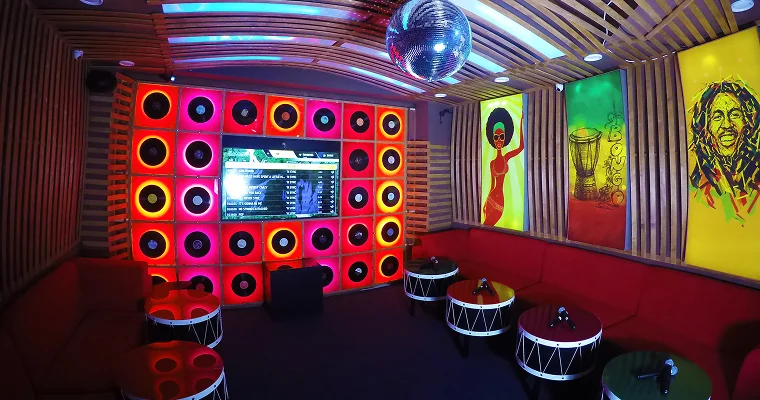
In Japan and China, this format breaks all records, while in Europe and the US, it is just beginning its expansion. It is ideal for birthdays and private corporate events, as well as for small groups relaxing after an active workday.
- Dimensions: From tiny 8 m² booths to spacious 50 m² VIP lounges.
- The thrill for the guest: No queues and no embarrassment in front of strangers. A group rents a room and sings only what they want, exactly how they want.
- How we make money: Hourly rental, food, and drinks (even if you don’t have your own kitchen, you can earn a percentage from partner deliveries).
3. Combo: Club + Rooms

The most balanced and popular option that gathers the maximum audience.
- How it works: One noisy hall with a stage for extroverts + 2 to 10 karaoke rooms for those seeking privacy.
- Drawback: The highest barrier to entry. You need a large area (from 150-200 m²) and significant investments in renovation and equipment, as each zone must have its own separate sound system.
4. Karaoke Public (Market Innovation)

An audacious hybrid of a nightclub and karaoke, with absolutely no rules, seating, or kitchen.
- Music: The sound engineer chooses the song based on the guests’ mood. No sad ballads—only dance hits known to everyone regardless of the language they speak.
- Open microphone: Whoever grabs the mic first gets to sing. Often, spontaneous duets form right in the hall.
- Dynamics: Guests don’t sit around until morning; the average check is generated in 1–2 hours at the bar. The venue cycles through hundreds of people per night.
- Main condition: Location. You can only open a “public” in a “tourist pipeline” (cities with a traffic of 1+ million tourists a year). In a residential area, this format is guaranteed to bring losses.
Summary Table for Investors
| Criterion | Classic Club | Karaoke Rooms | Combo (Club + Rooms) | Karaoke Public |
| Area | 100 – 200 m² | 10 – 50 m² | from 150-200 m² | 80 – 150 m² |
| Kitchen Investments | Yes | Optional | Yes | No |
| Tourist Dependence | No | No | No | Critical |
| Extra Monetization | Yes | Yes | Yes | No |
| Hourly Rental | No | Yes | Yes | No |
| Conflict Risk | High | None | High | None |
| Initial Investments | Maximum | Minimum | Maximum | Medium |
| Payback Period | from 15 months | from 6 months | from 20 months | from 12 months |
Summary: What to Choose in the End?

The secret to financial success rests on just two things: a prime location and top-tier sound. Guests will always return to where their voice sounds crystal clear and professional. Make your final choice of format only after strict mathematical calculations specific to your location, the purchasing power of potential karaoke-goers, and the cultural mentality of the audience.
Read also: How can your existing business earn more with karaoke?